
What are the ‘pecs’ and what do they do?
The pectoralis muscles, also referred to as the “pecs,” attach the sternum (the chest bone) to the upper arm (the humerus).
The “pecs” are responsible for shoulder flexion, adduction, extension, depressing, and internal rotation. As you can see, they play a significant role in posture and shoulder movement.
Where do the pecs attach, and why does that matter?
The pectoralis major is a large, fan-shaped muscle that starts midway down the collarbone and goes all the way down the sternum to the seventh or eighth rib. It spreads out to insert into the bicipital sulcus at the top of the humerus from this broad platform.
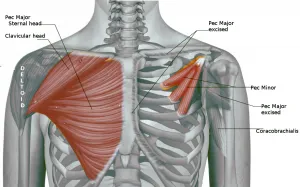
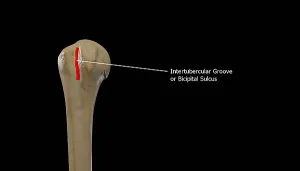
The pectoralis minor is a small, triangular-shaped muscle that inserts into the coracoid process, the part of the shoulder blade that faces forward. It originates from the third to fifth ribs (scapula).
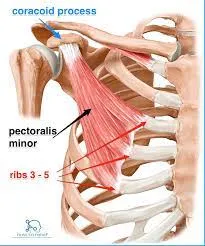
The pecs’ attachments are very important. This is due to the fact that if our pecs gradually tighten due to things like prolonged sitting posture, poor computer ergonomics, prolonged texting, excessive chest press exercise, and insufficient upper back strengthening, to name a few, the pec muscles will pull the top of the shoulder (the humerus) forward and inward, giving us the dreaded “rounded shoulders” appearance.
 (If you haven’t yet seen it yet, we would recommend reading our previous blog on **’Your rotator cuff and how to prevent breakdown‘)**
This is also the time at which your risk of damage exponentially rises. This is due to;
- The rotator cuff muscles change how much of the pressure they bear, with pecs’ tightness resulting in strength and rhomboids’/back muscles’ elongation resulting in weakness, which increases the risk of rotator cuff injuries.
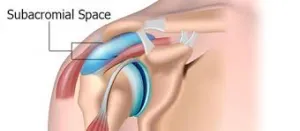
- As the arm moves, the subacromial space gets smaller, which causes the tendons and bursa to be compressed.
- When the rotator cuff is consistently overused, frayed tendons result (like rope that has been worn into them), requiring either surgery or intense physiotherapy to avoid the former.
The solution?
- Make sure your desk’s ergonomics are optimal.. If would like help, click here for a review by a Physio specialised in Ergonomic assessments.
- Strengthen your upper back muscles by completing low rows and banded external rotation exercises.
- Regularly stretch your pecs. (prevention is better than cure, trust me!)
Watch out for our upcoming article explaining how long to stretch a muscle for, and why!